
Microdosing mushrooms has shifted from a niche practice in Silicon Valley to a mainstream wellness trend in the U.S. Supporters claim it boosts creativity, improves mood, and even eases depression. But how much of this is hype, and what does the science actually show?
The truth is nuanced. While surveys suggest many users report positive effects, controlled studies paint a more cautious picture. Some benefits do appear consistently, but others may be more placebo than pharmacology.
This guide separates fact from fiction. You’ll learn the evidence-backed benefits of microdosing mushrooms, where the science still falls short, what risks to know, how the law stands in the U.S., and how to stay safe if you’re curious about this emerging practice.
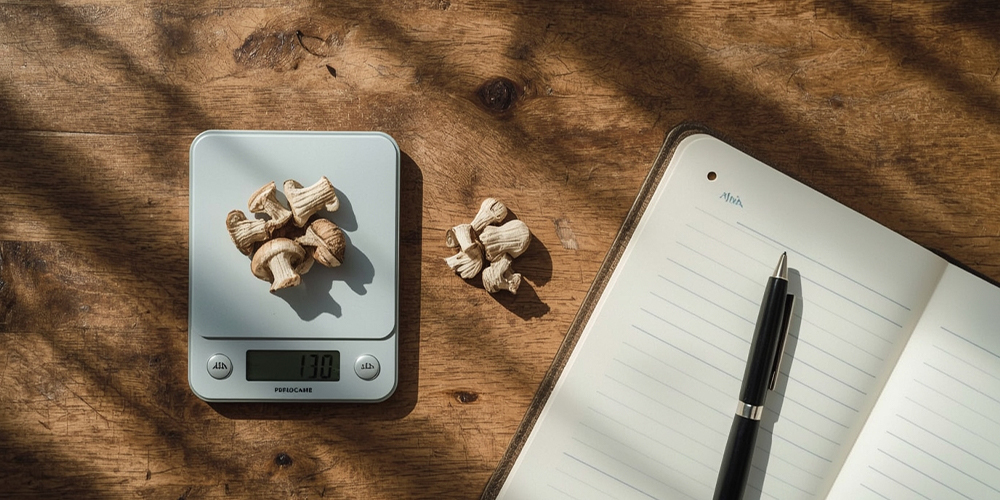
Microdosing involves taking very small amounts of psychedelic substances — most commonly psilocybin-containing mushrooms or LSD — at levels that are sub-perceptual, meaning they don’t cause hallucinations.
The goal isn’t to trip, but to subtly influence mood, cognition, or creativity without impairing daily functioning.
For a deeper dive into how this process actually works, check out Microdosing Mushrooms: How It Works.
| Claimed Benefit | Evidence Level | Key Findings |
| Mood enhancement | Moderate | Controlled studies show small improvements in mood |
| Anxiety reduction | Low–Moderate | Some observational reports; limited controlled evidence |
| Creativity | Weak | Little consistent evidence beyond placebo |
| Focus/productivity | Weak | Largely anecdotal/self-reported |
| Sleep quality | Moderate | Trials show mild improvements in sleep patterns |
| Pain perception | Moderate | Lab studies suggest reduced pain sensitivity |
| Social connection | Low | Mainly self-reports; few controlled trials |
Key Takeaway: Research suggests microdosing may modestly improve mood, sleep, and pain sensitivity. Evidence for creativity and productivity remains weak.
Microdosing is not risk-free. Even small doses of psychedelics affect the brain and body.
Possible side effects include:
Major risks:
⚠️ Warning: People with a personal or family history of psychosis, schizophrenia, or bipolar disorder should avoid microdosing.
Another limitation is the strong placebo effect. Multiple studies have shown that people often report benefits even when given inactive substances, highlighting the role of expectation.
If you’re wondering whether psychedelics fit your personal needs or lifestyle, you may find Are Shrooms For You? helpful before making any decisions.
| Level | Status |
| Federal | Psilocybin is a Schedule I drug (illegal). |
| Oregon | Legal regulated psilocybin therapy program (launched 2023). |
| Colorado | Natural Medicine Health Act passed — regulated access rolling out. |
| Cities | Decriminalized in Denver, Oakland, Seattle, Santa Cruz, Portland (ME). |
| FDA/DEA | Clinical trials ongoing; FDA evaluating psilocybin-assisted therapy for depression. |
Tip: For legal psychedelic support, U.S. residents can access ketamine-assisted therapy (FDA-approved for depression) or participate in clinical trials.
If someone is considering microdosing despite legal risks, harm reduction is essential:
Reminder: This information is for education, not encouragement. Legal and health risks remain significant.
For those seeking therapeutic benefits without legal risks, consider alternatives:
Microdosing mushrooms is surrounded by both promise and hype. Scientific evidence supports small improvements in mood, sleep, and pain perception, while creativity and productivity benefits remain largely anecdotal. Risks — from mental health concerns to legal consequences — should not be overlooked.
For U.S. readers, the safest options are regulated psilocybin therapy in Oregon, upcoming services in Colorado, ketamine-assisted therapy, or participation in clinical trials.
Bottom line: Microdosing may offer subtle benefits, but it’s not a magic fix. If you’re interested in mental health support, seek professional guidance and prioritize legal, evidence-based options.
1. What counts as a microdose of psilocybin?
Typically 0.1–0.5 g dried mushrooms, below hallucinogenic threshold.
2. Does microdosing really improve creativity?
Controlled studies show little evidence. Many reported effects are placebo-driven.
3. Can microdosing help depression or anxiety?
Some studies suggest small improvements, but evidence is not conclusive.