
If you’re asking “Why choose Amanita muscaria?”, you’re probably curious about what sets it apart from other mushrooms—and whether its benefits outweigh the risks. Here’s a balanced overview.
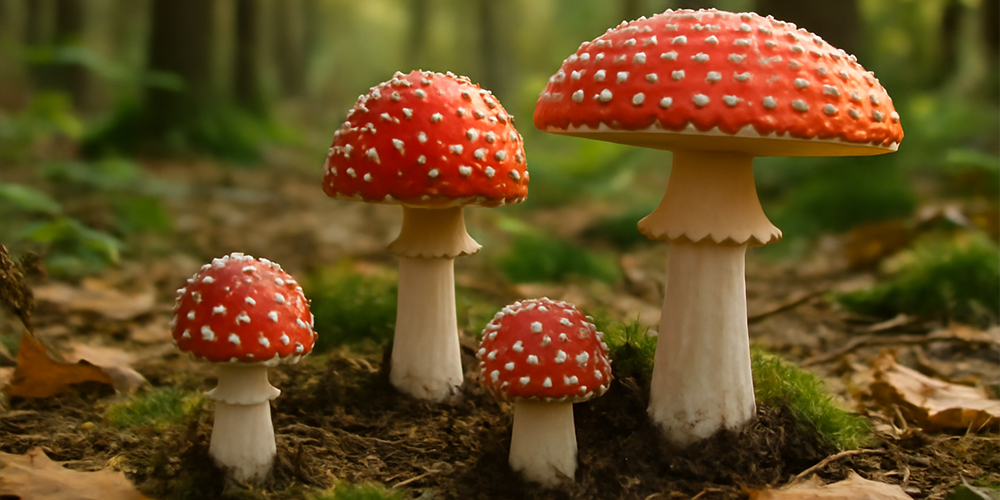
Amanita muscaria, commonly known as the fly agaric, is famous for its red cap with white spots, rich cultural history, and psychoactive compounds—primarily muscimol and ibotenic acid. Its effects vary widely, including sedation, hallucinations, dissociation, and sometimes paradoxical stimulation.
For a deeper dive into its history, uses, and chemical makeup, see What Is Amanita Muscaria?
Used historically in Siberian shamanic rituals and spiritual ceremonies, especially among the Sámi and other northern cultures.
Anecdotal users experiment with microdoses of dried muscimol-rich A. muscaria to harness calming, introspective effects without overwhelming intoxication.
Beyond consumption, A. muscaria forms critical symbiosis with trees (e.g., birch, pine), contributing to soil health and forest ecosystems.
Raw or improperly prepared specimens contain ibotenic acid, which causes nausea, vomiting, abdominal pain, drowsiness, and confusion. Even well-prepared preparations may still lead to adverse effects.
Unlike psilocybin mushrooms, A. muscaria effects are highly variable—ranging from vivid hallucinations to extreme confusion—and can include delirium-like states or even seizures at high doses.
To better understand how Amanita compares with other fungi, see Functional Mushrooms vs Psychedelic Mushrooms.
Safe preparation typically involves drying or parboiling to convert ibotenic acid into muscimol and reduce toxicity—but methods are inconsistent and not standardized, making dosing unpredictable.
Although muscimol and ibotenic acid are not scheduled under U.S. federal law, some states (like Louisiana) prohibit sales or use for human consumption. Emerging edible products (e.g., gummies) have triggered health and regulatory warnings due to inconsistent labeling and contamination, with hospitalizations and even fatalities reported.
| Factor | Pros | Cons |
| Traditional use | Rich spiritual heritage | Limited formal evidence, anecdotal claims |
| Mental health benefits | Relief in surveys | Variable responses; no large-scale clinical validation |
| Experience | Sedative, introspective, hallucinogenic effects | Unpredictability; risk of confusion, overdose |
| Preparation | Techniques reduce toxicity | No standard dosing; preparation errors |
| Legal status | Often unscheduled | Legal ambiguity; restricted in some regions |
People drawn to A. muscaria may seek:
Choosing Amanita muscaria may appeal to those seeking novel psychoactive experiences or exploring herbal traditions—but the practice comes with significant uncertainty and risk. If someone is drawn by potential benefits, it’s essential to:
For most users, safer, more predictable options with clinical support are strongly advised.