

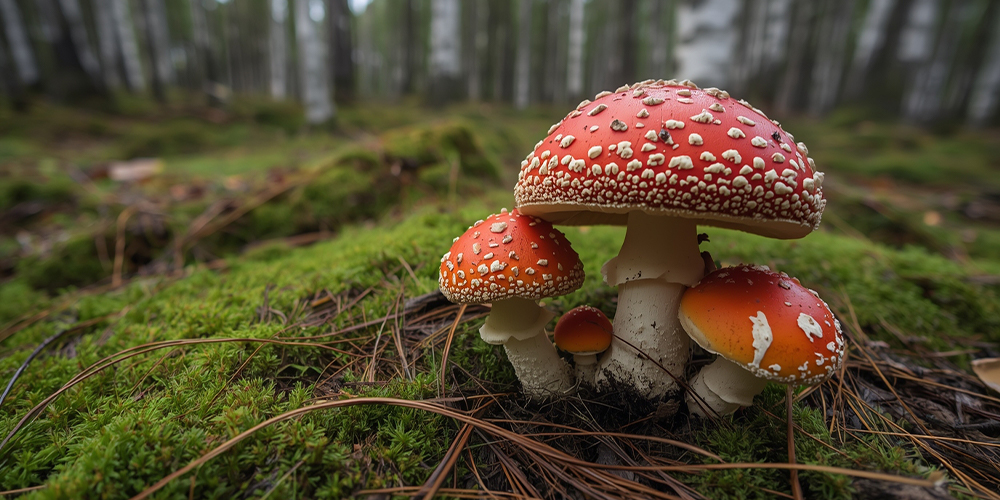
Amanita muscaria, commonly known as the fly agaric mushroom, is one of the most recognizable and iconic mushrooms in the world. It’s famous for its vibrant red cap dotted with white spots, often depicted in fairy tales, folklore, and popular culture. But beyond its striking appearance, Amanita muscaria holds a complex place in nature, culture, and even pharmacology.
For a closer look at the unique reasons why people value this mushroom, see Why Choose Amanita Muscaria.
Amanita muscaria is a species of mushroom in the Amanitaceae family. It’s widely distributed across the Northern Hemisphere, growing in symbiotic relationships with various trees, especially birch, pine, spruce, and fir. This mycorrhizal association means the mushroom exchanges nutrients with its host tree, benefiting both.
The striking look of Amanita muscaria has made it a symbol in many cultures, often linked to magic, mysticism, and spiritual rituals.
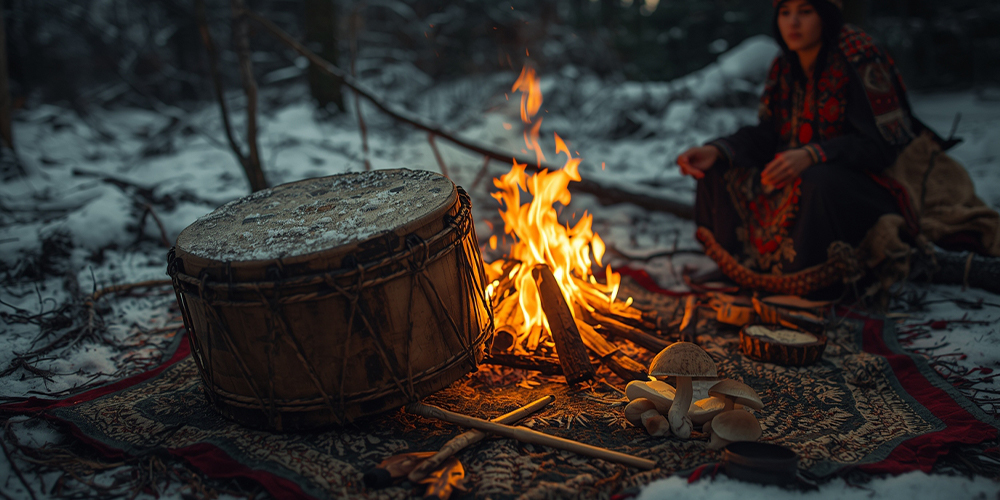
Amanita muscaria has a long history of use, especially in Siberian shamanistic practices. Indigenous Siberian tribes consumed it for its psychoactive properties, using it to induce altered states of consciousness during rituals. Some scholars suggest it might have influenced religious myths and folklore around the world.
In Western culture, it’s often associated with fairy tales and fantasy imagery, like the iconic mushrooms seen in “Alice in Wonderland” and video games like “Super Mario Bros.”
Amanita muscaria contains several active compounds, most notably:
Unlike classic psychedelic mushrooms containing psilocybin, Amanita muscaria’s effects are quite different:
Drying the mushroom usually converts ibotenic acid to muscimol, reducing toxicity and increasing psychoactivity.
To see how mushrooms are also being incorporated into innovative products today, take a look at Magic Mushroom Chocolate — What Is It — Why Use It.
Though both Amanita muscaria and psilocybin mushrooms (commonly called “magic mushrooms”) produce psychoactive effects, their chemistry and experiences differ significantly:
| Feature | Amanita Muscaria | Psilocybin Mushrooms |
| Main Active Compound | Muscimol & Ibotenic Acid | Psilocybin |
| Effects | Sedative, dissociative, hallucinations | Classic psychedelic (visual, cognitive) |
| Toxicity | Potentially toxic if raw | Generally low toxicity |
| Cultural Use | Siberian shamanism, folklore | Global psychedelic culture |
Amanita muscaria is a fascinating mushroom with a rich cultural history and unique psychoactive properties. It stands apart from typical magic mushrooms and carries both intriguing potential and risks.
If you’re interested in exploring Amanita muscaria, education and caution are essential—misidentification or improper preparation can be dangerous.
Amanita muscaria is a visually stunning and culturally significant mushroom that offers a distinct psychoactive experience. While its historic and shamanistic uses highlight its unique place in human tradition, its potential toxicity demands careful respect and thorough understanding. Whether you admire it as a symbol in art or are curious about its effects, Amanita muscaria remains one of nature’s most fascinating fungi.
Q: Is Amanita muscaria safe to eat?
A: Amanita muscaria is toxic when raw and can cause poisoning. Proper drying and preparation can reduce toxicity, but it should be used with extreme caution.
Q: What does Amanita muscaria look like?
A: It has a bright red or orange cap with white spots, white gills, and a white stem with a ring.
Q: Does Amanita muscaria cause psychedelic effects like psilocybin mushrooms?
A: It causes different psychoactive effects, mainly sedation and hallucinations, not the classic psychedelic experience associated with psilocybin.