
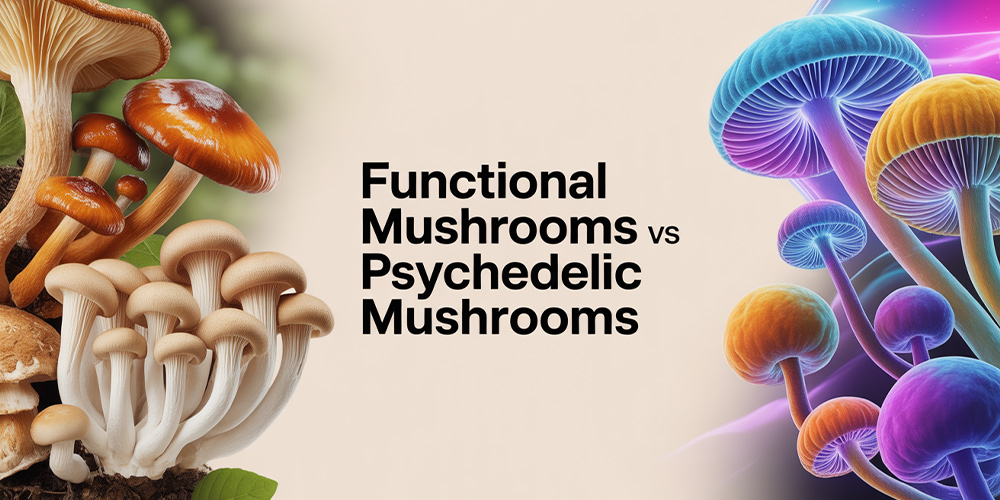
Across the United States, mushrooms have evolved from culinary curiosities to wellness and therapeutic icons. On one side are functional mushrooms, found in coffees, gummies, and adaptogenic supplements. On the other are psychedelic mushrooms, long shrouded in controversy yet now resurfacing in clinical studies for mental health treatment.
Though both belong to the same biological kingdom, their effects, legal status, and scientific backing could not be more different. This guide breaks down the evidence, mechanisms, benefits, and safety profiles of each — giving readers a clear, responsible understanding of what separates functional from psychedelic mushrooms.
Functional mushrooms are non-psychoactive species valued for their nutritional and medicinal compounds rather than for mind-altering effects.
Read our full guide: What Are Functional Mushrooms?
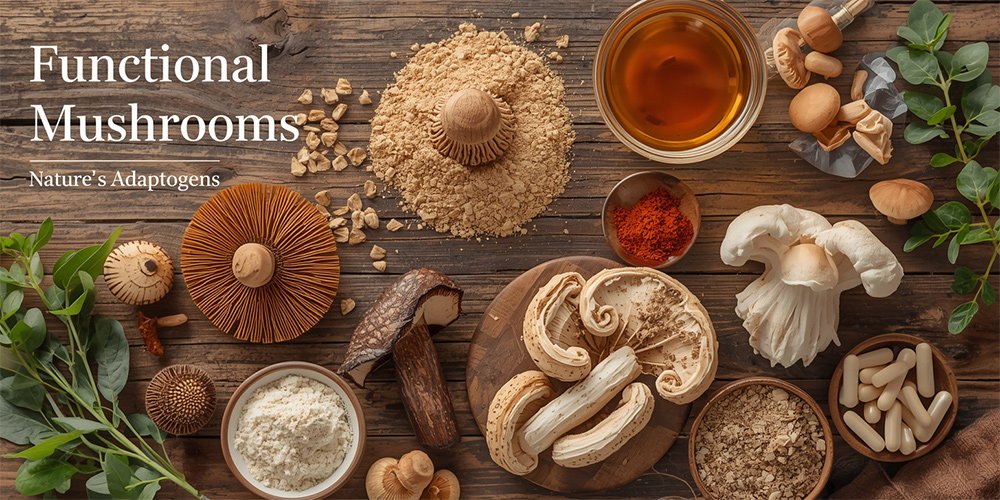
Common examples include:
Functional mushrooms derive their effects from beta-glucans, polysaccharides, triterpenoids, and phenolic compounds.
Key Takeaway: Functional mushrooms nourish and regulate — they don’t alter consciousness.
Modern science supports several traditional claims:
Results are encouraging but not definitive — most evidence remains preclinical or from small human trials.
Functional mushrooms are generally safe for daily consumption.
Potential mild effects include digestive discomfort or allergic reactions.
Because they are sold as dietary supplements, they are not FDA-approved for treating diseases. Quality varies widely; consumers should choose standardized, third-party-tested products.
Psychedelic mushrooms — often called “magic mushrooms” — contain psilocybin, which converts in the body to psilocin, a compound that binds to 5-HT2A serotonin receptors in the brain.
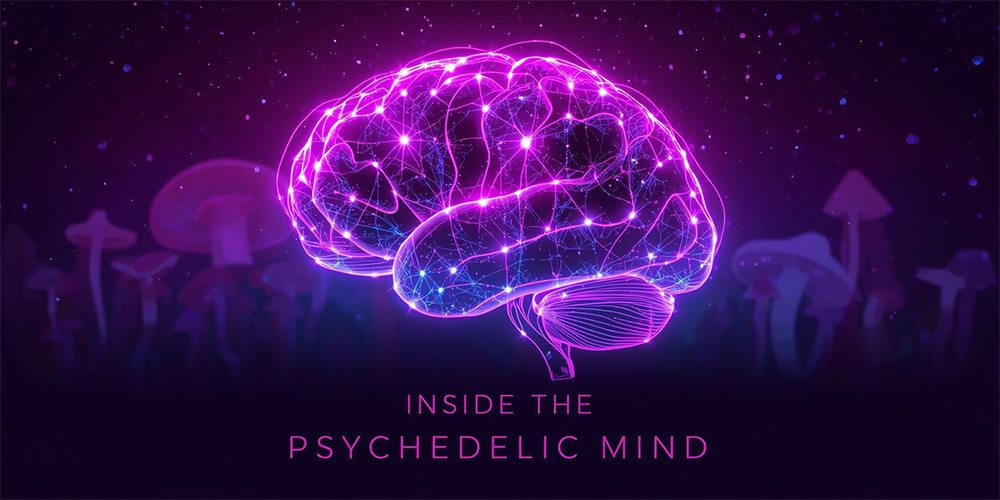
Psilocybin temporarily disrupts typical brain network activity, particularly within the default mode network, a region linked to self-reflection and rumination.
Functional MRI research at Johns Hopkins University (2024) demonstrated that psilocybin increases global brain connectivity while decreasing rigid thought patterns, leading to profound shifts in perception and emotional processing.
Psychedelic research is expanding rapidly:
Emerging research also supports psilocybin’s potential in treating PTSD, addiction, and end-of-life anxiety. However, most trials remain small and tightly controlled.
While psilocybin is physiologically non-toxic, its psychological effects can be intense:
Proper set, setting, and supervision are essential for safe therapeutic use.
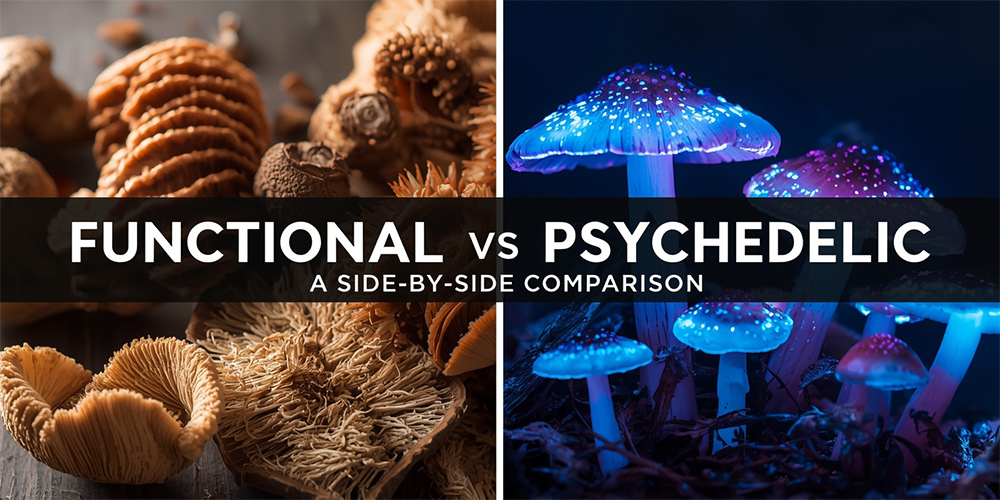
| Feature | Functional Mushrooms | Psychedelic Mushrooms |
| Main Compounds | Beta-glucans, triterpenoids, polysaccharides | Psilocybin, psilocin |
| Primary Effect | Adaptogenic, immune, cognitive support | Altered perception, mood, and consciousness |
| Therapeutic Focus | Wellness, energy, immune balance | Depression, PTSD, addiction |
| Legality (U.S.) | Legal nationwide as supplements | Federally illegal (Schedule I); limited state reforms |
| Risk Profile | Mild GI or allergic reactions | Psychological risks, contraindications |
| Regulation | Dietary supplement framework (FDA) | Controlled Substance Act (DEA) |
| Use Context | Daily supplement, food ingredient | Supervised therapy or illegal recreational use |
| Myth | Fact |
| Functional mushrooms can cause hallucinations. | False — they contain no psilocybin. |
| Psychedelic mushrooms are legal everywhere now. | False — only Oregon and Colorado have partial legal frameworks. |
| All mushroom supplements are safe and standardized. | False — quality and dosage vary; always verify testing and purity. |
️ Key Takeaway: Functional mushrooms are widely accessible and legal; psychedelics remain restricted to research or licensed therapeutic environments.
The functional mushroom industry in the United States is booming, projected to exceed $5 billion by 2026. Coffee brands, protein powders, and nootropic blends are mainstream.
Meanwhile, the psychedelic therapy market is expected to surpass $2 billion by 2030, driven by FDA fast-track designations and decriminalization trends. Public perception is shifting — from “drugs” to mental health tools, though legality remains limited.
Both movements signal a broader cultural acceptance of mushrooms as part of health and consciousness exploration — one legal and nutritional, the other therapeutic and emerging.
Functional mushrooms and psychedelic mushrooms share a common origin yet serve vastly different purposes.
Both deserve respect — one for its adaptogenic wisdom, the other for its emerging potential in medicine. In the United States, understanding the scientific facts, legal boundaries, and safe practices ensures curiosity leads to clarity, not confusion.
1. Are functional mushrooms psychoactive?
No. They do not contain psilocybin or cause hallucinations. Their effects are physiological, not psychological.
2. Can functional mushrooms improve mood naturally?
Yes, to a modest degree. Compounds like hericenones in Lion’s Mane may support mood regulation by enhancing nerve growth, though data remain early.
3. Are psychedelic mushrooms legal in the U.S.?
They are federally illegal. Only Oregon and Colorado have regulated or decriminalized limited therapeutic use.